
Tuesday, December 28, 2010


Monday, December 27, 2010
Something missing from Old Salem?
 |
| Ginny Hens Running Loose in Old Salem |
 Spending a little time in public records you will discover that much is missing from the historically accurate presentation of Salem in the intended time frame. As I walk through the streets of Salem I have been attempting to garner a better understanding of what this place was really like prior to the Civil War. I find this very difficult. The first problem is that much of what was present then is gone. The details are mind boggling! Many buildings, especially farm type buildings, and the surrounding forest are no longer here. The streets are now all paved; there are no more cobblestone, brick, wood, dirt or mud streets. The grade of the streets has also drastically changed over the years to better accommodate travel, drainage and street cars. There are no people in the distance working in their fields. There is no sound of the turning potters wheel or the banging of hammer to anvil. There is no clip, clop, clip, clop of horses hoofs or turning of wood wheels rolling down the streets. What of the swish of long skirts and petticoats or the sound of clean wash blowing in the wind. The smell of straw, hay and manure are gone not to mention the smell of the many privies (a posting coming about that later!). You can walk safely through the streets and yards with no thought for what you might step in next. You can take a deep breath without fear of what you might smell. Do you begin to get the feeling that the historically adequate presentation of Salem based on the era prior to the Civil Was has some serious flaws?
 In an attempt to understand and imagine life in pre Civil War Salem I have been conducting a little research and think I may have stumbled on a major missing ingredient to historical accuracy we fail to consider in today's sterile society. Share in my delight following with me studying these public record entries and see if you get the picture.
 |
| Care to meet this in the street or your yard? |
June 12, 1772 - "There is complaint from the Brethren and Sisters in the town that so many cattle roam the streets that it is dangerous for the children. Answer was made that each should fence in his own yard, and keep the children there or in the house, and not let them run about on the streets."
Are you paying attention? Fence in the yard to keep the children safe from animals freely roaming throughout the town! Don't be concerned about the farm animals, don't let the children run about in the street. How long could this possibly continue? Watch your step or you may be cleaning your shoes!
 April 8, 1816 -"For some time it has been customary to let cows that belong in town stand in front of the houses instead of being let immediately into the barnyards. This is disorderly, and bad for the streets, and should be remedied as soon as possible. It would be avoided if the cows were let into the barnyard or stable as soon as they come home."
Did you get it, “come home”, where had they been all day? Where is the historical depiction of the "barnyard or stable" at the homes of Old Salem?
April 22, 1838 -"Complaints were reported about the hogs rambling through the community, about the nightly noise of too many dogs, the bulls and cows in the streets and the great number of doves causing damage in gardens. We wish that all this which harms the love and harmony in the community could be removed."
In the 1850’s Mrs. Webb’s short-tailed cow is reported as a nuisance. The Mayor was directed to inform Mrs. Webb that unless she put up her cow it would be dealt with according to the Ordinance.”
May 26, 1858 The Mayor was requested to notify Mr. Linebach that his cow, because of its vicious habits, not be allowed to run at large.
August 20, 1859- “Ebert was allowed to turn his cow out again-provided he can secure her in such a manner as to prevent her from doing any mischief.”
June 30, 1873- A petition was received from 53 citizens requested that an ordinance be enacted prohibiting hogs from running at large”…as we are satisfied they are a nuisance to our citizens.” The petition was referred to a committee. By 1874 ordinances were in place to “arrest” hogs running at large. The laws were repealed on January 15, 1875. At the January 25th meeting, a new hog law was enacted.
June 19, 1874- Mayor Vogler suggested to the Board the necessity of building a pound (fenced lot) for hogs and cattle. The Board resolved to build a pound ten feet square and six feet high. It appears that this Pound was used mainly for impounding hogs running at large within the town limits. The charge against the impounded hog was 40 cents for picking up by the Town Constable, and 10 cents per day for feeding each hog weighing over 100 pounds and 5 cents for pigs under 100 pounds. The owner could redeem his property by paying the costs. If not redeemed, these animals were sold at public auction, after notices posted at designated places for ten days.
You would think after the Civil War they might have these issues under control. NOT!
HOGS AND DOGS ORDINANCE
At the November 1, 1895 meeting an ordinance was passed on the keeping of hogs. It stated “No owner or occupant of any Lot within the Town of Salem, with a frontage of not more than 50 feet on any street, shall keep more than two Hogs; with more than 50 feet and less than 100 feet frontage more than four Hogs; and with more frontage than 100 feet more than 6 hogs, and in all cases where it is desired to keep Hogs on lots having no street frontage or on lots have no house thereon, no Hogs shall be kept. In all cases, the Hog pens shall be kept clean and shall be constructed with floors not less than 10 inches above the surface of the ground.”
Multiply these allowed hogs by the number of homes and what is the potential for hogs in town?
HOG LAW
After several unsuccessful attempts at banning hog lots from Salem, a petition was presented by property owners on Cherry Street calling for an ordinance prohibiting the keeping of hogs in a district bounded by West, First, New Shallowford and Elm St. This was immediately followed by a petition by another group of citizens asking that the law not be changed in that area. At the November 6, 1903 meeting an ordinance was passed favoring the banning of hog keeping in the area. On November 10, two petitions from another section of Salem regarding hog keeping, one for, one against were presented. The Sanitary Committee noted that the majority of property owners in the area actually favored keeping hogs and in this section would not recommend the banning of hog pens.
COW ISSUES
As Salem became more urban, the issue of animals in the back yard became more of a problem. By 1911, hog pens were still allowed in the south east section of the town. There was no general ordinance regarding the keeping of cows or chickens.
 June 2, 1911-A petition was received requesting that Mr. Jones cow lot on Poplar St. be declared a nuisance. This was referred to the Sanitary Committee. The Board of Health took up the issue on July 24 with Mr. Jones and his attorney. The questioning takes up two pages of Minutes Books. The lot was 200 ft square and contained 35 or 40 head of cattle. The Board of Health recommended that Jones have until April 1912 to move the lot. April 5, 1912- An Ordinance was approved prohibiting the keeping of more than 4 cows within the corporate limits and making it illegal to operate a dairy within the corporate limits.
THE HOG PROBLEM
One of the first taxes imposed by the Commissioners of Salem in 1857 was a tax on hogs. These animals had to be provided with a collar and tag or some other means of identification to show that the owner had paid this tax.
The minutes of the Salem Board of Commissioners are replete with recordings of complaints and requests made to the Board about the problems created by hogs running at large. There were instances where one group of citizens would present a petition asking that the Board pass an ordinance prohibiting this freedom of the hogs. However, before the Board took action on such a petition, another group of citizens would submit a petition opposing any restrictions on the hogs. In one case, at the request of citizens concerned, the Board prohibited the keeping of hogs within the designated area. However, this was not very effective since the hogs running at large in adjoining territory did not observe this imaginary restricting boundary line.
Hogs ranging in their natural habitat are not necessarily unclean animals, and they become offensive only when confined in close quarters and are forced to wallow in their own filth. They instinctively wallow in mud to get relief from insects, and perhaps they consider this a kind of beauty treatment.The citizens apparently placed a high value on their hogs and they were not very receptive to restrictive town ordinances. The minutes of the Board of Commissioners of Winston, dated August 7, 1868, record: "On motion Section Nineteen of the former ordinance in relation to the taxation of hogs is hereby repealed and the following Ordinance is adopted and ordered to be posted up.
These animals eat most anything with impunity, and are subject to few diseases. When ranging at large they devour almost everything in reach above ground and when this source of food supply is exhausted they root down into the ground in search of further nourishment. These activities can soon devastate the landscape.
A note follows "See ordinance placed on next page marked Exhibit A." The next page of the minutes indicates that the attached ordinance had been removed. Perhaps this ordinance was later rescinded. The Board minutes of June 21, 1873 records: "On motion the Mayor was directed to confer with the Salem authorities as to the property of a Hog Law, and arranged to act consistently."
It is obvious that as the town expanded and the population density increased, it would be necessary for the town authorities to adopt ordinances and regulations to control the hog problem, just as it became necessary to collect and dispose of night soil from surface privies (another story to tell?) and ultimately to install a sanitary sewerage system.
On June 10, 1876, the Board of Commissioners of Winston adopted this ordinance:
- That if any hog or hogs belonging to a citizen of Winston shall be found at large upon the streets of Winston, it shall be the duty of the town officer to have the same taken up and impounded, and after advertising the same for three days at the Court house door, if the owner thereof fail within that time to redeem them by paying a fine of fifty cents for each hog, unless there be more than two hogs belonging to the same owner, and in that case ten cents each over the excess of two, and twenty cents per day for feeding each hog, to sell the same to the highest bidder, and out of the proceeds arising from such sale to pay off all forfeitures, costs and expenses, and pay the overplus to owner on demand; and in case no owner shall redeem within the time specified, nor make application for the said overplus within thirty days after sale, the same shall be forfeited to the use of the corporation.
- That each and every hog found rooting up any street or sidewalk of the Town, or otherwise injuring the same, or breaking into any garden or other enclosure, or which shall, in anyway, become troublesome or mischievous, every such hog is hereby declared to be a nuisance, and the owner of every such hog, on notice thereof by the Town Constable, shall immediately remove said hog beyond the Corporate limits of the town, and keep same out of said town, and on the failure thereof shall forfeit and pay one dollar for each day that such person shall suffer said hog to run at large in the town after such notice.
June 21,1875-"A certain Spotted Sow, four Shoats and four Pigs, said to be the property of Mrs. Fishel, was declared to be a public nuisance, said hogs having been habitually on the public streets and sidewalks of Winston; running at large, rooting and damaging same for more than twenty days. The Town Officer was ordered to notify the said owner that from and after three days the same would be abated.” This was the only business conducted at this meeting.
HITCHING RACKS AND FEEDING TROUGHS
July, 1876-"It is ordered that any person who shall put a hitching rack or other place for hitching stock, every such person shall so provide said rack or hitching place as to prevent any horse or other stock so hitched from getting upon the sidewalk. And no person shall put up any trough upon the street for feeding stock, and each and every person who has heretofore erected any such trough upon the street shall remove the same on five days notice from the Mayor, and no person shall erect any such rack or hitching place on the side of the streets next to and around the Court House Square, and each and every person who shall violate any of the provisions of this ordinance shall for each offense forfeit and pay Twenty Five Dollars."
HOGS TURNED OUT
June 20, 1879-“On motion it was ordered that owners of hogs be allowed to turn them out from this date till the first day of October 1879.”
HOGS IN SALEM
March 6, 1914-“A petition was presented to the board asking that the citizens of the Salem Ward be allowed to keep and raise hogs. The petitioners were informed that the Board had decided not to allow any hogs to be raised in any section of the city.”
On Feb 5, 1915, a similar request was presented “...by colored citizens asking that they be allowed to raise hogs on Columbian Heights. The Board took no action on the petition.”
Do you smell it yet? Lets add some fragrance, fence in Old Salem, leave the cars out and turn the animals loose in the streets and yards! Now, that would be historical accuracy, don't you think?

Sunday, December 26, 2010
History and Faith of the Moravians – The Faith Reborn at Herrnhut

"The history of the Moravians comes to life at Old Salem. A unique religious group, the Moravians made the town of Salem an oasis of beauty and order in the Carolina back-country. Today in the workshops, homes, and gardens of Old Salem, men and women carry on the daily tasks of living just as they were done in the late eighteenth and early nineteenth centuries - crafting beautiful objects, running households and businesses, and engaging in artistic and musical pursuits. This guide will help you make the most of your visit to Old Salem, one of the most authentic living-history museums in the United States."
The Faith Reborn at Herrnhut
For decades the church survived in small, hidden enclaves in Bohemia, Moravia, and Poland. In 1772 in Dresden, Christian David, a carpenter and a member of the Unity of the Brethren, met Count Nicholas Ludwig von Zinzendorf. During their conversations about religion, David told the count about how its members yearned to practice their faith in the light of day. Zinzendorf offered to let a few families settle near his estate at Berthelsdorf, in the German state of Saxony.
Led by Christian David, a small company of Brethren slipped out of Moravia in May 1722. They traveled through Bohemia to Saxony to take sanctuary near Zinzendorf’s vast estate. In this refuge, the Moravians gathered strength and built a carefully organized communal town called Herrnhut, a word with two meanings: “under the Lord’s watch” and “on watch for the Lord.”
 |
| Zinzendorf preaching to people from many nations |
With the Herrnhutter’s varied backgrounds and ideas about how their community should be run, dissension was inevitable. To quell the arguments that were splitting the community, Zinzendorf devised a plan to foster harmony, outlining it in the carefully crafted Brotherly Agreement of the Brethren from Bohemia and Moravia and Others, Binding Them to Walk According to the Apostolic Rule. This document, which contains many principles of the old Unitas Fratrum, became the foundation for all future Moravian congregation towns, including Salem. It reflected Zinzendorf’s long-held belief in being kind to all people, being true to Christ, and carrying the gospel to nonbelievers or the “heathen,” as Zinzendorf put it.
Saturday, December 25, 2010
Merry Christmas!

Merry Christmas from the staff of Walking Through Salem
Think about this book for your coffee table next Christmas!

Think about this book for your coffee table next Christmas!
 |
| Click on Photo! |
Friday, December 24, 2010
Old Salem Christmas - 1840


"Deftly written by Karen Cecil Smith and appropriately illustrated by Bebe Phipps, "An Old Salem Christmas, 1840
 " is the story of a young girl who attends a Moravian Lovefeast in celebration of Christmas back in 1840. As part of the celebration she joins a candlelight service of sacred music and texts and afterwards savors a sweet bun and a cup of milky coffee. A Protestant Christian sect, the Moravians had their own distinctive traditions which author Karen Smith has faithfully portrayed in "An Old Salem Christmas, 1840", making it a highly recommended picture book for young readers and a welcome addition to school and community library collections"
From the Thomasville Times:
Something about the Moravian culture spoke to Karen Cecil Smith, something about the simple faith with a grand dream — and a tasty Christmas tradition — embedded in modern-day Winston-Salem and encased within Old Salem Museum and Gardens that drew her closer.
A sect of Protestantism that originated in what is now the Czech Republic, the Moravian Church migrated from its first permanent North American settlement in Bethlehem, Penn., to found the city of Salem, N.C., in 1766. The restored Salem village, reviving some of that culture of old, is part of Old Salem Museums and Gardens and borders Salem College, which Smith attended.
The memories of the Moravian influence clung with Smith throughout her life, so much so that when she decided to pen her first children’s book, she molded a member of the faith as her heroine.
“I’ve always loved Old Salem, and I love the Moravian traditions,” said Smith, who now lives in High Point. “It’s just part of the whole Winston-Salem culture. I wanted to write a children’s picture book about Christmas that reflected the true meaning of Christmas while throwing in some historical information about the Moravians.”
The book, titled “An Old Salem Christmas, 1840,” depicts the faith’s Christmas traditions from a child’s perspective. From decorating cookies to attending the famous Moravian Christmas Eve Lovefeast celebration, the little girl walks through her community’s celebration of the holiday while exploring the season’s true meaning.
“Christmas has become so commercialized,” Smith said. “I think a lot of people have lost sight of what it really means, the birth of Jesus, and it’s not just Santa Claus and food and that sort of thing. I did include those things in the book — presents and what children look forward to at Christmas — but I wanted it to have a message.”
Released in December 2008, the book was illustrated by Bebe Phipps and received the North Carolina Historical Society’s Clark Cox Historical Fiction Award. Smith worked hard to keep the story light enough for her 4-year-old to 8-year-old audience while still working in historical details such as the Moravian candle-lit vigil and traditional snacks of sweet buns and coffee served at the Lovefeast.
“I just had to really think about it,” Smith said of keeping her tone childlike. “I didn’t have a child to ask, so it took some time.”
But it was worth the effort. Smith says she has always dreamed of writing a book for younger readers, and that goal finally came to fruition.
“I’ve always been interested in writing and all genres, really,” she said. “I had played around with writing children’s books for a long time, since I was a kid. I love children’s books now, too.”
Smith first became a novelist in 1996 when research she was doing for a newspaper article on the famous midwife Orlean Puckett led to a wealth of first-hand accounts. A happen-stance meeting with one of Puckett’s relatives resulted in introductions with the woman’s many friends and neighbors.
“I started getting so much material that I knew I had enough for a book,” Smith said. “That’s what prompted the first book.”
Smith’s first published work, “Orlean Puckett: The Life of a Mountain Midwife,” was strictly a biography, following her pattern of passion for the past. The author is currently working on three other books, all with a historical tie.
“I love historical fiction and biographies, true stories,” Smith said. “Even if they’re fiction, I try to make sure all the historical facts are accurate.”

Wednesday, December 22, 2010
Shell Shaped Gas Station
 |
| 1111 Sprague Street |
 |
| Original Construction - 1930 |
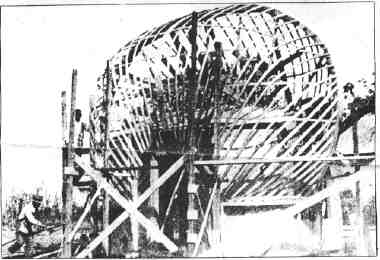
The building is an example of representational or novelty architecture and was listed on the National Register of Historic Places on 13 May 1976.
 Preservation North Carolina, an organization dedicated to the preservation of historic sites, spent one year and $50,000 to bring the landmark station back to its original condition. Workers removed layers of faded yellow paint to reveal the Shell's original yellow-orange color. The original front door was repaired and a crack fixed that had been previously sealed with nothing more than black tar. The wooden, trellised shelter that housed the car wash and allowed cars to be washed and/or serviced in the shade was reconstructed as well. The oil company donated restored gas pumps and replica lamp posts to help finish off the restoration. The landmark now serves as a satellite office for Preservation North Carolina. If you have never seen this, it is well worth the trip!
Tuesday, December 21, 2010
Funny Prayer about Getting Old at the Caregiver of the Year Dinner
If you are dealing with aging parents or aging yourself, you will love this! Hey, not dealing with either, your time is coming so enjoy.
Monday, December 20, 2010
Tanks and Gatling Guns Defending Salem - 1918
The New York Times - 1918Racial tensions were high in America following World War I. In 1919 alone, 25 race riots, mostly by whites, rocked the nation’s cities. More than 70 blacks are known to have been lynched following the war. Resentment came to a head when whites returning from the war found blacks holding jobs normally reserved for whites. The growing black population in Winston-Salem heightened tensions in the city. The Ku Klux Klan, which enjoyed resurgence after the war, marched through local neighborhoods.
Southern Race Riot Costs Five Lives: Army Tank Corps Called to Quell a Lynching Mob in Winston-Salem, N.C. Battle with Home Guards, Jail-Storming Crowd Overcomes Them, as Well as Police and Fire Companies
Winston-Salem, N.C., Nov. 17. – The death toll in the riot here tonight which followed efforts of a mob to storm the jail and lynch a negro prisoner had been increased to five—a woman spectator, a city fireman, and three Negroes. The police believe that a detailed search tomorrow will show that at least seven persons were killed.
This building tension came to a head on Saturday November 16, 1918, as white couple Jim and Cora Childress strolled toward Pulliam’s store about one half mile from there home. As she and her husband reached the Southern Railroad trestle, over what is now Inverness Street, they were accosted by a black man who hit Jim over the head with a pistol, robbed Cora of $2.25, dragged her down into a ravine and allegedly raped her.
There are many confusing variations to what occurred next. The sheriff was summoned to the scene and deputies began looking for a man fitting a somewhat vague description offered by Cora who claimed that she could identify him. They observed a man generally fitting the description and a pursuit began. The Sheriff joined in and the man turned and fired, hitting the Sheriff in the hand. The posse lost the assailant and the Sheriff ordered a roundup of suspects. A number of people were initially arrested but released. Police stopped Russell High on Sunday afternoon on the corner of Fourth and Depot streets for carrying a concealed weapon. High, a black man recently moved here from Durham was reported by the Sheriff as having “borne a good reputation, had been industrious, and had spent the greater part of the time in his room…” The police were convinced that he had nothing to do with the attack. Rumor abounded that the police had arrested the man and charged him with rape.
On Sunday afternoon, November 17, a large group of whites gathered on Courthouse Square and rumors of lynching began. By evening, the crowd had grown estimated to be between 2,000 and 3,000. There was a lot of drinking and some of the crowd began to break into hardware stores and steal firearms to force a jailbreak. The Mayor, other civic leaders and even Cora Childers appeared and tried to reason with the crowd...to no avail. The crowd was chanting “We want that nigger! We want to lynch him.”
 |
| Forsyth County Court House |
The crowd broke and ran down 4th Street into the black residential section. Gunfire was heard throughout the night until about 3:00 AM Monday morning. Several black residents were killed for whom death certificates exist. Eyewitnesses say that many other blacks were killed as well, but their bodies were stuffed into culverts or thrown onto railroad boxcars and sent out of town.
 The Mayor summoned National Guard troops from Charlotte, Greensboro and Raleigh who patrolled the streets. A tank was set up on the square. By daylight on Monday, while the night of gunfire and violence had ended, gatling machine guns were set up on Fourth Street aimed toward the black residential area in anticipation of a counterattack that never came.
  Russell High was taken by authorities to Raleigh early Monday morning for his protection. He served time for his weapons violation and was never seen in Winston-Salem again.
 In the following days, a number of people were charged with inciting a riot and attempting to break into a public jail, which was then a capital offense. Sixteen white men were convicted and given sentences ranging from 6 to 14 months on the county road gang. One black man was convicted of the murder of a Southern Utilities Company worker and executed in Raleigh.
Strange thing about the World War I era South, thousands of whites riot, a few whites are killed, most probably from bullets from guns fired by whites, a number of blacks die, no one knows how many, tanks and gatling guns are deployed to defend against blacks who haven't done anything, and only one black man is convicted and executed for murder of one white man. And we wonder why we have racial tension.
Sunday, December 19, 2010
History and Faith of the Moravians – Hidden Seed
Excerpt from "Old Salem - The Official Guidebook" by Penelope Niven and Cornelia Wright (click on the link to purchase your copy). Visit the official website of Old Salem Museums and Gardens"The history of the Moravians comes to life at Old Salem. A unique religious group, the Moravians made the town of Salem an oasis of beauty and order in the Carolina back-country. Today in the workshops, homes, and gardens of Old Salem, men and women carry on the daily tasks of living just as they were done in the late eighteenth and early nineteenth centuries - crafting beautiful objects, running households and businesses, and engaging in artistic and musical pursuits. This guide will help you make the most of your visit to Old Salem, one of the most authentic living-history museums in the United States."History and Faith of the Moravians – Hidden Seed
As soon as word of their heresy reached Rome, the brethren were declared “shameless vagabonds” and outlaws and were persecuted accordingly. Their history played out in blood and fire, in dogged footsteps through the wildernesses, in words carefully expressed in strange languages and inscribed on pages that others burned, in passive resistance and active proselytizing, in pride in work, in spiritual struggle and in stubborn faith in God and each other.
 They were a half century ahead of Martin Luther’s Reformation movement. By the time that Luther nailed his ninety five theses to the Wittenberg church door in 1517, there were scattered throughout Moravian, Bohemia, and Poland four hundred Moravian congregations with 150,000 to 200,000 members. By 1501 the Moravians had published the first Protestant hymnal. In 1593, they issued the Kralice Bible, a translation into Czech that was fourteen years in the making. It was the first complete version of the Bible to be published in a vernacular language and is still read today by Czech speaking people. (In 1453, Gutenberg had been the first to print the Bible in any language. The King James translation of the Bible was completed in 1611.)
Early in the seventeenth century, thousands of the Brethren left Bohemia in a mass exodus to escape religious persecution, including imprisonment, torture and even death. Their schools and churches were destroyed and their Bibles, catechisms, hymnals, and church records were burned by religious and civil authorities. The surviving congregations of the Unitas Fratrum were forced underground by the Counter-Reformation and the prolonged struggle of the Thirty Years War, which ended in 1648. In the end, only remnants of the old congregations survived, worshipping in secret. Even in severely reduced numbers, however, the Brethren were indomitable.
 |
| John Amos Comenius |

Thursday, December 16, 2010
The Yankees Are Coming
 |
| Major General George Stoneman |
 |
| William J. Palmer |
Carolyn Fries Shaffner wrote: “immediately commenced packing as we were certain that they would burn the factories and we feared the house would go also.” News of the fall of Richmond and Petersburg added to the stress. Residents were somewhat relived after a small party of Confederate cavalrymen arrived and set up a line of couriers to Greensboro. When Colonel James Wheeler’s Tennessee cavalry regiment came later, “the hills below town were soon bright with their camp fires.” Although Wheeler’s men stayed only overnight, squads of Confederate cavalry visited the town regularly in the uncertain days prior to the raid. The residents waited in expectation that the raiders would appear at any moment. There were reports that the raiders had disappeared over the mountains into Virginia, and the would-be-defenders dissipated. Then came fresh horror of news that raiders were headed toward Salem. All across Salem, citizens made fresh preparations hiding everything of value they could. It is reported that one citizen, attempting to hide valuables inside of the church, fell through the church ceiling. Southern boys at home on sick leave made themselves scarce. Some left town to hide on neighboring farms. Pennsylvanian Fred Antes had been in the saddle since seven in the morning. There was no prospect of a halt until the men reached Salem. “Marched hard all day,” he wrote.
The Mayor of Salem had consulted with some of the largest property holders of the town and it was the general opinion that the principal inducement for the enemies visit would be the destruction of the factories. They came to the unanimous conclusion that it would be advisable to make a formal surrender of the towns. Joshua Boner, Mayor of Salem, Rev. Robert de Schweinitz, Principal of Salem Female Academy and H. Thomas, Mayor of Winston, were appointed as a committee to prevail on the troops, if the factories are to be destroyed, to do it by some other means than fire.
About two dozen leading citizens of Salem marched north to meet the Yankees waving white handkerchiefs. They were not well received because a hot-headed Confederate picket fired at Palmer’s advance guard a little farther down the road. Consequently, despite their white handkerchiefs, the good burghers of Salem were nearly trampled by a squad of irate Yankee horseman.

 (It is reported that they captured Mayor of Salem Joshua Boner's top hat as they rushed past.) On into town we went, the people flying in all directions, and in a few moments we were in the center of the place, right in front of the post office.”
 According to local legend, troopers grabbed the reins of Salem Female Academy Principle de Schweinitz’s horse, and Palmer pulled a pistol. When the principal defiantly called out, “I am de Schweinitz,” Palmer suddenly recognized him. Holstering his pistol, he said, “I had a teacher of that name when I was in school in Lititz.” Such tales were typical and rampant following the event. The truth of the matter is that Palmer was not present when this exchange occurred, and he did not attend school in Lititz. Palmer, his staff, and other Federals arrived a few minutes later and defused the situation. Introductions were made and Palmer politely asked several questions. The federals learned that Salem was undefended and assured the citizens that both they and their private property would be protected.
Interestingly the incident about de Schweinitz probably came from the experience of Nathaniel Sample one of the twelve members of the advance guard. Sample says that on pursing the rebels toward Salem that the town reminded him of Lititz and Bethlehem, Moravian communities in Pennsylvanian he was familiar with. He meet the principal of the academy de Schweinitz and wrote this: “In following them (the Confederates) through town (it was raining), I noticed a man come out of a house, hoist an umbrella with a white handkerchief on top and advance to the sidewalk. I rode up to him and asked to what command the party that fired on us belonged; he protested they were boys that belonged to the home guard. He was very nervous and seemed much interested in my appearance and finally asked me what the letters 15th P.V.C. on my hat meant. I explained it stood for the 15th Pennsylvania Volunteer Cavalry; his countenance changed at once and he said, “Why, I am from Pennsylvania!” I asked him what part; he said Lancaster County, - that he was principal of the girls’ school here and had been detained in Salem by the war. I recognized him then as the principal of the girls’ school at Litiz when I was attending the boy’s school there. He asked me to protect his school, which I did by placing a safeguard about the buildings in which there was said to be 300 young girls from all over the South. We were the first Federal troops that Salem had ever seen, and when the people discovered we did not have horns or hoofs or forked tails and that some of us were from Lancaster County, Pennsylvania and knew the Lititz people, they became very friendly and treated us to the best they had.”
 |
| Union Cavalry Flag |
Salem was now teeming with Federal cavalrymen. “Before we could realize it,” a Moravian church official wrote, “soldiers were seen at every corner of the streets, had taken possession of the post office, and secured our whole town.” The Moravian Archives records show: “In very great comparative silence about 3,000 cavalry passed through our town, pitched their tents on the high ground beyond the creek (The area of Happy Hill Plantation). Had it not been for the noise their horses and swords made, it would have been hardly noticed that so large a number of troops were passing through our streets. The strictest discipline was enforced, guards rode up and down every street and very few…were the violations of proper and becoming conduct on the part of the soldiers. Fears were entertained by some, whether there good behavior would continue to last, and no doubt many a prayer ascended to the throne of a prayer hearing and answering God; and not in vain, for no outrages except the pressing of horses…were committed and even the cotton manufacture was spared by the Federals…”
As well behaved as these Yankees were, the local citizens hedged their bets hiding everything from horses to ham hocks until the bluecoats left town.
The war would end shortly with Lee’s surrender at Appomattox Virginia and additional surrender at Durham Station North Carolina. The fact that the mills were not burned in Salem, while those in Mocksville and Jamestown were put to the torch, was to give Salem a head start on rebuilding as Reconstruction began. A gift from God, or a gift from the Moravian’s ongoing Pennsylvania connections?
Tuesday, December 14, 2010
First Salem Jail
 |
| First Salem Jail |
Adam Butner, best know as operator of Salem Tavern, started out as a hatter in a shop constructed in 1825 on Main Street North of Winkler Bakery. Following the incorporation of Salem as a town on March 10, 1857 the new board of commissioners rented the former Adam Butner Hat Shop on Main Street at $30.00 per year to be used as a “Hall and Watch-house.” (This building was reconstructed by Old Salem, Inc. in 1965 and operated as an adjunct to the bakery, before opening as a museum retail store in 2008.) F. Fries was commissioned to build a lock-up in the lower part of this building of 12 feet square of 2 inch oak planks with a good and substantial iron-grated door.
June 23, 1857 – The Board met for the first time in Commissioner’s Hall. Desks, chairs and benches had been purchased and installed and the walls of the building whitewashed.
April 7, 1858 – Since the lockup below the Commissioners Hall was probably the most secure building in Salem, it would have been used for holding slaves as well as criminals. At this meeting the Mayor proposed rules for use of the lockup by slave owners including the amount they were to be charged for feeding and the responsibility for cleaning the lockup when they left.
This building being inadequate, discussion was started almost immediately about building an appropriate building but wasn't addressed for many years.
During the Civil War in 1862 a Mr. Hughes requested to use the Commissioner’s Hall for cutting cloth for soldier’s uniforms. The request was granted. In January 1864, the agreement with Mr. Hughes was rescinded since Hughes was not cleaning up the Hall before the Commissioner’s were supposed to meet.
 |
| Former Jail Building as Reconstructed Left of Winkler Bakery |
Monday, December 13, 2010
The Reynolda Illusion
 | |
| Reynolda Estate |
If you are a visitor to our Salem, or a resident unfamiliar with the history of the R.J. Reynolds family
 , it is probable that you share in the Reynolda Illusion. The Illusion is that the historic Reynolda Estates
 was the fairytale home of local tobacco Baron Richard Joshua Reynolds (1850-1918). Perception and reality are seldom in agreement and often confused by intended or unintended illusion. The story of our wonderful Reynolda Estate is no exception. Please understand that this post is not intended to belittle what Reynolda has become. As a student of the life and times of Richard Joshua Reynolds, and his family, few could possibly enjoy the experience more than I. Although somewhat ignored in earlier years, should you raise question about any of what is addressed in this post it will not be sidestepped by today's informed Reynolda staff. It will also not be addressed in great detail when you inquire or be blatantly placed before your face by staff to adversely affect the illusion.
 To begin with Reynolda
was not the fairytale dream of Mr. Reynolds, as I understand she chose to call him, but that of his young bride Katharine Smith Reynolds . Mr. Reynolds referred to the land being acquired by his bride as "The Farm". Yes, the complete estate was owned by Katharine Smith Reynolds (1880-1924), it was not held in the name of her renowned husband. He considered it her estate, not his! There was good reason for this in the drastic thirty year difference in their ages and the fact it was her project from start to finish. With exception of providing his vast wealth to fund Katharine's little project he left everything to her. Without doubt Mr. Reynolds knew that there was little chance he would live long enough to gain much pleasure from his brides wonderland and, as it turned out, he was very correct in his judgment.
 |
| R.J. Reynolds Home 666 West Fifth Street |
rather than a fairytale. There life had been somewhat of a fairytale existence during the early years of assembling the land and constructing what would become Reynolda. That existence was at a completely different and little know home located at 666 West Fifth Street. Mr. Reynolds had constructed this home from a mail order design (a popular method at that time) about 1893 (Katharine was a 13 year old living in Mount Airy, NC with her parents). Prior to his marriage he occupied the home with his mother, brother Will and Will's wife Kate. Mrs. Reynolds died shortly before their marriage and Katharine moved into the Fifth Street mansion, Will and Kate moving to a hotel. Four lively children were born and would bring joy to the aging Mr. Reynolds life in this Fifth Street home. During their time together as a family this was their home and fairytale existence, not Reynolda Estate!You will find the story of Katharine Smith Reynolds
and her Reynolda Estate in "A World of Her Own Making" by Catherine Howett. "...with almost unlimited wealth...She envisioned the founding of a model community that would emphasize health, modern technology, mixed-crop scientific farming, education and rural beauty...inspired in part, by the rural landscape of England...The estate eventually expanded to cover more than 1,000 acres."  |
| The R.J. Reynolds Family |
- 1890 - Mr. Reynolds gives his 10 year old cousin Kate Smith, daughter of his mothers sister, a gold bracelet with a joking promise that when she grows up he would marry her.
- In her youth Kate suffers from an aliment, possibly rheumatic fever, leaving her with a chronic heart condition causing issues throughout her life.This condition caused bearing of children to be very dangerous and she experienced ongoing issues with her health throughout her life.
- June 1902 Kate now called Katharine graduates from Sullins College in Bristol, Virginia where interestingly Mr. Reyonlds sister Lucy had attended many years earlier.
- December 1902 it appears that Katharine had entered into a new relationship with her fathers friend and first cousin once removed "Dick" Reynolds. "Dick's" mother and Katharine's mother were sisters. Mr. Reynolds was three years older than her father, five years older than her mother and at 52, thirty years older than she, at twenty two. Mr. Reynolds had already exceeded the average life span of an American man at the turn of the Century.
- Spring 1903 Mr. Reynolds beloved mother, Katharine's aunt dies. She and another young female cousin accompany Mr. Reynolds on a trip to New York. He offers Katharine a job as one of his secretaries in his Winston office. The only female secretary! She accepts and leaves home for Winston within a month.
- October 1904 Katharine is engaged to marry this most desirable, wealthy bachelor and man about town. Mr. Reynolds has a reputation as a sporting man who liked cards, gambling, strong drink, horses and the company of women.
 |
| Katharine Smith Reynolds |
- 1906 Shortly following their return to Winston planning begins for starting a "farm" on the outskirts of Winston as she is involved with improvements to the Fifth Street property. The first track of 104 acres is acquired. During the course of this work she would do much traveling and have four children at, the typical for the time, two year intervals. Their first child Richard Joshua "Dick", Jr. is born April 4th 1906. There are later rumors of her health problems.
- August 1908 Daughter Mary is born
- May 1910 Daughter Nancy Susan is born
- 1910 Henrietta van den Berg who the children refer to a "Bum" is hired as live in nurse for the children. "Bum" will become a major influence in all of their lives literally running the household and "The Farm" in Katharine's many business, pleasure and heath related absences.
- November 1911 son Zachary Smith called "Smith" is born.
- 1911 Kathrine hires Charles Barton Keen to design their "Bungalow" as the Reynolds referred to their new 64 room home. Construction of numerous buildings proceed over the next few years. Drawings would have the name "Mrs. K.S. Reynolds Estate" Not R.J. Reynolds or even Mrs. R.J!
- 1912 Construction of the "Bungalow" begins and takes five years.
- 1917 In the absence of Mr. and Mrs. Reynolds, who were convalescing in different hospitals in the North, she dealing with her heart condition, and he with what would later become known as Pancreatic Cancer, care of the children, completion of the "Bungalow", the move from Fifth Street and decorating their new home for Christmas was supervised by "Bum".
- December 1917 A few days before Christmas the Reynolds return and Mr. Reynolds, with nursing staff moves into a hospital bed in his first floor office of the "Bungalow" arriving from John Hopkins Hospital in Baltimore. Apparently, he was ill enough that dealing with the steps to his second floor bedroom wasn't possible.
- May-June 1918 Mr. Reynolds returned to the hospital in Baltimore until June 20th when he returned by train to Winston and Katharine's beloved Reynolda.
- June 29th 1918 Richard Joshua Reynolds 68 dies at Reynolda. From happy marriage through four children in only 13 years and slightly over six months after they occupied their new home at her Reynolda Estates. His brief time at Reynolda was spent convalescing in a hospital bed in his first floor converted office or in the hospital at Baltimore. It appears he never slept in his new second floor bedroom.
 - Over the next few years Kathrine will marry a younger man, Ed Johnston, in controversy with the Reynolds family who weren't invited to attend the small Reynolda ceremony, spend little time at Reynolda, have a child die in childbirth, and die on May 23, 1924 of an embolism shortly after giving birth to a son. After their mothers death there is much controversy surrounding the stepfather and children. He moves to Baltimore with his son and the family spends very little time at their mothers beloved Reynolda. The new son is never a welcomed part of the Reynolds family and is raised by his father in Baltimore far from Reynolda and the children of R.J. Reynolds. Smith is later involved in a "shot gun" wedding to a textile tycoons daughter which doesn't last long. A daughter is born, he marries renowned torch singer Libby Holman
 and dies at Reynolda following a gun shot wound to the head on June 5th 1932. There is much world wide controversy over whether a murder by his new wife and/or his best friend or a tragic accident. She and Smith's best friend are prosecuted for his murder. Libby is found to be pregnant and Will Reynolds presses for the charges to be dropped. Smith's son is later killed in a mountain climbing accident at 18 years old.
Does this sound like a Reynolda fairytale to you? I don't think so!
 |
| Forsyth County Public Library |
Subscribe to:
Posts (Atom)